Mazi Mutafa reflects on 10 years of Jazz & Blossoms
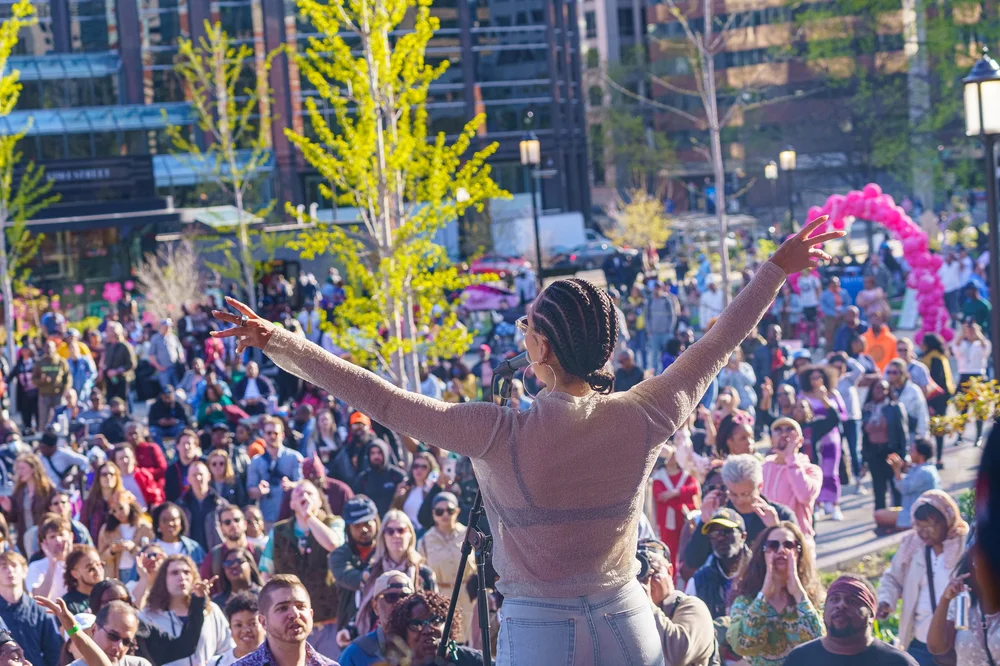
Jazz & Blossoms returns to Franklin Park this Sunday for its 10th year of live music programming, with artists spanning across jazz, hip-hop, poetry and R&B.
Hosted by hip-hop arts education non-profit Words, Beats and Life (WBL), the jam is the brainchild of executive director and co-founder Mazi Mutafa, whose work is grounded in the transformative power of public art. What started as a small student-run conference at the University of Maryland has grown into what Mutafa calls a “festival for the culture,” with live music, spoken word performances, open mics and workshops.
Placed strategically in April, as a nod to Jazz Appreciation Month and Poetry Appreciation Month, the jam celebrates the full spectrum of Black music, honoring the overlapping and mutually-influential histories of jazz and hip-hop. The languages of the two genres have long been intertwined, beginning with the jazz and funk samples utilized by early hip-hop artists like Digable Planets and A Tribe Called Quest, and later with artists like J. Dilla, Guru and The RH Factor, who merged jazz instrumentation with rap and hip-hop production techniques.
Since its inception, Mutafa has platformed legendary acts from jazz, hip-hop and spaces in between, underscoring the ongoing convergence of these styles in contemporary Black music. This year’s lineup features headliner Tweet, hip-hop fusion band Oddisee & Good Company, trumpeter Nabate Isles, the Chuck Brown Band, and The Funset, a DJ duo composed of Jahsonic and Harry Hotter.
In advance of this year’s jam, Mutafa sat down with CapitalBop to talk about WBL’s history, as well as its efforts to bridge generational gaps and unite the sounds and communities of several Black music cultures.
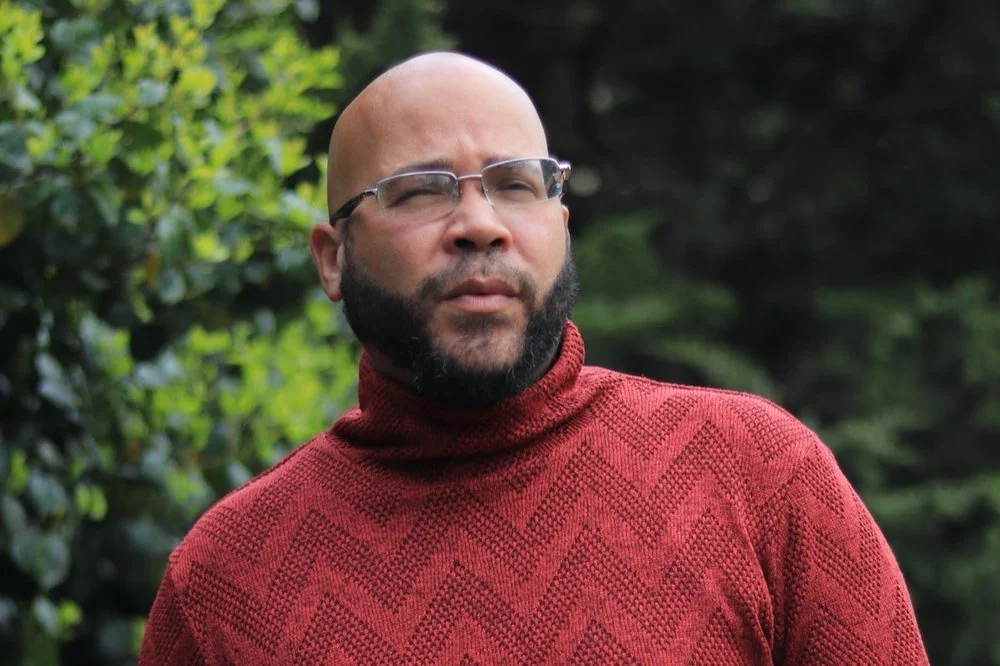
CapitalBop: How did Words, Beats and Life come to be?
Mazi Mutafa: I hosted a conference at the University of Maryland for two years beginning in 2000. It included a creative and hip-hop career fair, panel discussions, hands-on workshops and concerts. After I graduated, I decided to create our first program, the Saturday Arts Academy, which had DJ, graffiti and dance workshops. Jazz & Blossoms is a standalone park jam, which started nine years ago and is a tip of the cap to how hip-hop started in the parks of the Bronx.
CB: This is your fourth year of hosting the Jazz & Blossoms Jam in April in honor of Jazz Appreciation Month. You previously hosted it in November as part of Hip-Hop History Month. Why did you choose to lean further into presentations of jazz, and how did that shape this year’s festival?
MM: Often hip-hop generation people are inspired by jazz, just like A Tribe Called Quest. Jazz has always been in the foreground of rap music. It makes sense for us as a hip-hop organization to be elevating jazz, as a musical genre, as a community and as a culture. For all intents and purposes, jazz is the grandparent or parent of hip-hop.
CB: In what ways do you feel like the jazz tradition is ingrained in hip-hop culture?
MM: They come from the same roots — they’re an expression of lived experiences. They represent surviving Africanisms, things like call and response. There are aspects of each genre being about an expression of rage too. Not just the material conditions, but a huge amount of jazz is non-verbal, so the emotions that are experienced are truly felt, not said. The same thing is true for a lot of hip-hop. It’s not just what’s said, but how it makes you feel as a listener. They’re both asking you to be present.
CB:Some people look down on hip-hop or jazz music that strays from that straight-ahead sound, proclaiming that “real jazz is dead.” In what ways does the Jazz & Blossoms Jam counter this and represent the ever-expanding sounds of jazz and hip-hop today?
MM: I think that people that think that musical genres are dead have the expectations of mass popularity to be the standard of life. There’s current popular music being made by hip-hop generation people but in other genres. Shaboozey, a hip-hop generation artist connected to hip-hop communities, is making country music.
So does that mean hip-hop is dead or that it’s doing with other genres what it did with jazz? Adopting, reforming and making them in their own image and in the historical image of the people that actually created those genres to begin with.
CB: In October, for the first time in 35 years, there was a week where the Billboard Hot 100 top 40 contained no hip-hop songs. In response, many people said that “hip-hop is going back underground.” Do you feel like that’s accurate? Where do you find innovation in hip-hop in the mainstream?
MM: I don’t subscribe to the idea that it’s going back underground. I think the way people are accessing music is changing. When I’m on my Instagram feed, almost every reel is filled with rap music or hip-hop beats or jazz. So the question is: Is the way people are accessing, using and experiencing music changing in a way that is not being captured because the record industry hasn’t monetized it yet?
CB: Why is it important to platform such a wide spectrum of Black music?
MM: I want to be programming a festival that you could bring your mother or grandmother or your little sister to, and have everybody enjoy the music and be able to participate in the activities. It really helps that the go-go community is so deeply appreciated here and also has room for jazz musicians who’ve been here since the Chitlin’ Circuit.
D.C. has a rich jazz presenting history, and has produced rappers who come from the same space and popularized R&B artists who might be from other places. They all come to D.C. to make their bones and build their audience.
CB: How would you describe D.C.’s musical identity and culture and how do you work to capture that in your programming?
MM: D.C.’s music is go-go. D.C. is also an importer and a celebrator of other people’s culture, but also an exporter of its own musicians to other places to influence and impact arts and culture.
Because of its appreciation for the live instrumentation of go-go, D.C. has a music audience that loves a live show. Because there’s so much respect for the live experience — for the musicality and instrumentation — it’s natural that D.C. loves jazz. D.C. is a place where music is not just witnessed, not just participated in, but celebrated and appreciated.