Transcription as Spiritual Presence: Andrew White and John Coltrane
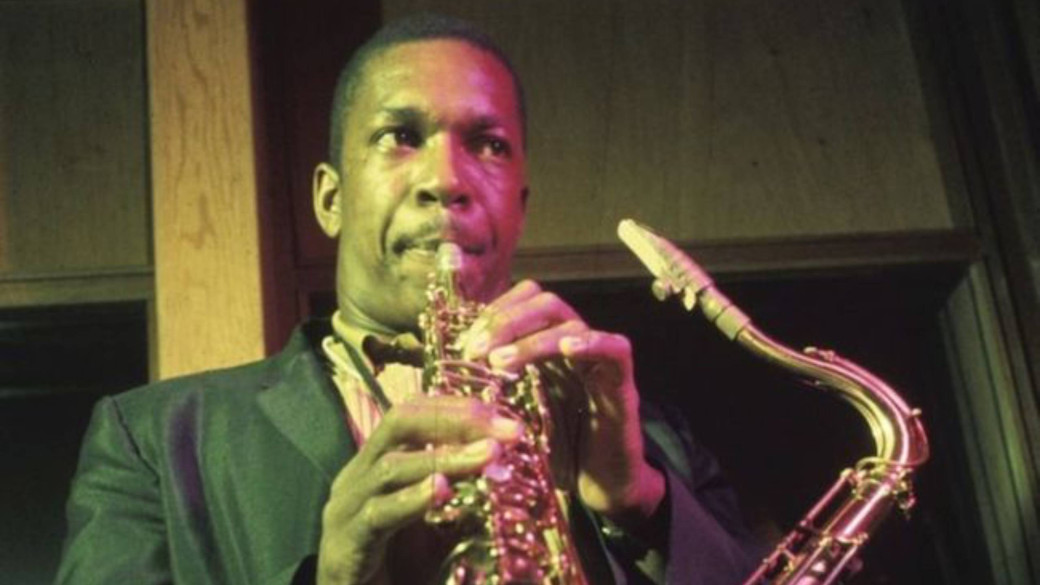
In the music, transcription is the foundation for learning technique. To work through how other musicians manipulate time and its relationship to sound, navigating the musical information necessary for that manipulation and reducing the sound to notation, are critical steps in the acquisition of one’s place in the tradition. This is modern jazz education.
But for Andrew White, transcription seemed to be more. It was spiritual presence. The late DC-based saxophonist famously published over 1,000 John Coltrane transcriptions. The dedication was a path inside, a journey to the interior of what at its core was a ritual practice. It was something White himself witnessed in Coltrane’s many performances in the District.
In his 1981 “semi-autobiography” Trane N’ Me, White provides a glimpse of Coltrane at a critical stage of the development of this spiritual force. After attending a 1962 performance at Abart’s Jazz Mecca, White wrote that he noticed how central breath was to Coltrane’s emerging sound, calling it “polydiatonicism:”
He knew he didn’t have to worry about building momentum in his solos from this perspective because the momentum was already built in due to the standard recurrence of the cadence. After a while the listener gets to expect the cadence. He is conditioned to the cadence. He is conditioned to breathing. Breath is life. The music must breathe. Elvin was the breath in Trane’s music.
For White, Elvin Jones was critical for what Coltrane would offer in the form of the breath, the “systematic dissonance which would keep the listener on the edge of his seat.” Breath matters to the physical manipulation of the instrument. But breath is also how spirit enters, a portal for the sacred. Breath was a resource for those captured and kettled by both forms of unfreedom and the ways they emerged in art musics that held down the possibilities for radical transformation. This was a difference that White could feel in playing as part of the JFK Quintet, and then in witnessing Coltrane’s quartet. Breath could change things.
In the context of what he terms “Blackpentecostal Breath,” the scholar Ashon Crawley writes:
The rememory of breath as the intentioned performance of breathing — whooping, for example — produces an otherwise-than-history, one not dependent upon Newtonian physics of smooth, linear, contained time and space, but a performance of breathing and its eclipse as the hallucination of life and love in the face of the project of the plentitude of gratuitous violence and violation. But the breath, every breath, even stolen, breaks down the project through rememory. Remembered is the balance between the individual and the social. Generated are variations around the theme of discontinuity and openness as a way, as a form, as a politics against violent silences and enclosures, mutilations and deaths.
White’s transcriptions are important archival documents that, in the right hands, could transform jazz academy approaches to the music. In Trane N’Me White also asserted that jazz education had faltered precisely in its failure to recognize that this was about something more, that freedom was implicit in the act of breathing. In that sense, White’s transcription project painstakingly detailed this process, a process through which breath disrupted violation and offered something else in its place. Coltrane’s music was an act of rememory.
In a DownBeat interview around the same time as his Abart’s appearance, he offered: “I think the main thing a musician would like to do is to give a picture to the listener of the many wonderful things he knows of and senses in the universe.”
To invite that presence into one’s life was about witness, about listening, and about offering a visual element that could envelop you — like White’s transcriptions surrounding rooms in his house. It was about knowledge and what could happen. And it was about what you can sense, that might need to be realized next.
That this opening of sorts could occur in D.C. was no small thing. It speaks to the significance of this space as a space where this kind of breathing happened. And it also recalls the kinds of practices that had to be in place to make that breathing accessible to generations who were entering it on their own terms. One could come here and have that otherworldly experience because there were those who sacrificed much to make this space available.
But the same sorts of struggles that Crawley mentioned, the ways to confront “violent silences and enclosures” were underway in the city then and are critical to understand now. They are critical to understand as part of the history of jazz — as not just a history of transcriptions — of invocations of spiritual presences that reconceive of the times we are in, that reconceive of jazz as resistance. Musicians are at the core of that resistance impulse. This music was not just a soundtrack to the times, it was the time. It told us what time it was. This is what Coltrane was telling us.
As we celebrate Coltrane100, we should remember that this message has been kept alive by those like Rasafik Weusi and the United Black Community, who for years have hosted the DMV community’s annual tribute to the Coltranes. It is part of our local reminder of what John Coltrane’s music has done for generations of Washingtonians. Andrew White was one of the legion.