Kalia Vandever and the intimate journey home
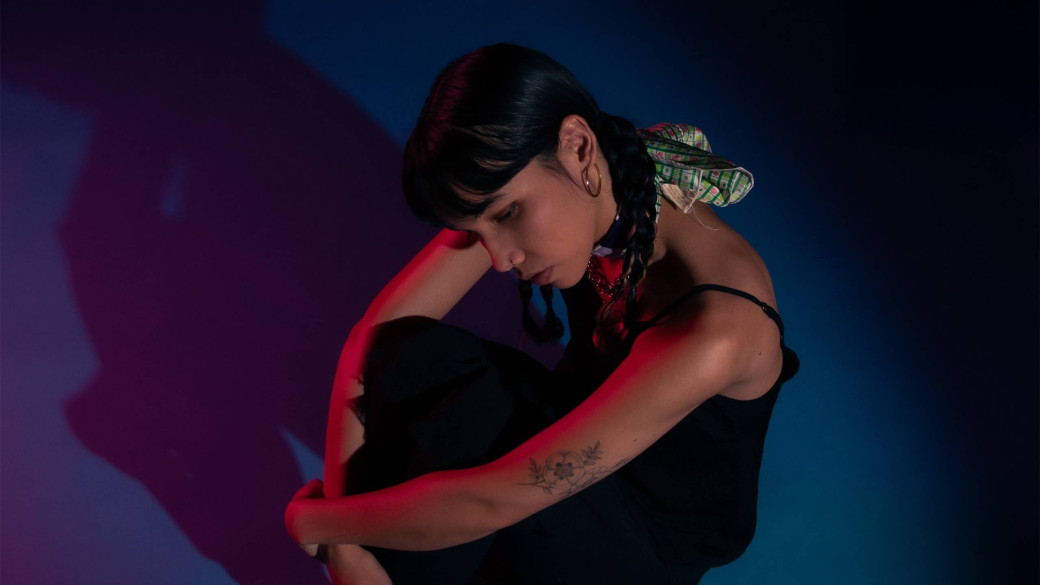
Kalia Vandever
Rhizome DC
June 14, 2026
Kalia Vandever is pushing through a moment of grief. In turn, the trombonist is pushing us to consider our relationship to grief. We felt this in Vandever’s recent offering at Rhizome, where they performed solo last month in support of their new record Mana (out June 30 via International Anthem). There, the intimacy offered a place for that grief to go, a place that was almost like home. Rhizome is a place unlike the venues where Vandever usually brings this sound. But perhaps that is why grief is difficult for those surrounded by colonial legacies. Home becomes less and less familiar. And then where can grief go?
Vandever — who uses nonbinary pronouns — performed solo at Rhizome. Nevertheless, their music offered multi-instrumental compositions that often centered voice and lyric. Mana itself is a “solo” record, consisting of Vandever’s trombone and voice manipulated live through pedals, and paired sparingly in post-production with acoustic piano. Vandever wrote this collection of music at an artists’ residency where they were able to focus on expanding this distinct approach to solo trombone performance repertoire.
Despite the virtuosity of their horn playing, it was in the moments where Vandever sang that the power of the “first instrument” took us directly inside of their world and what it feels like. Their voice became a more direct and even assertive carrier for mana — a concept within Vandever’s indigenous Hawaiian roots that speaks to the presence of “divine and supernatural spirit.” Mana is the force that gives “strength and power to living beings, places, and objects,” as Vandever described on the album’s liner notes. And though mana was thought to exist in the highest registers among those who were given authority and responsibility, we all could possess it and it could grow though our relationship to the “inner self, native land, and ancestral power.”
From this indigenous spiritual foundation, Vandever’s personal story is illuminated through an ambient soundscape constructed of tender solo voices. To listen is to be transported from wherever we are to the soil of lands that can renew our relationships to the past and what we thought we may have lost, both personally and collectively.
Early on in the set Vandever performed one of Mana’s singles, “Hubbard Road,” a tune that reconnects us to space through repeating loops of piano and trombone. Even during the live set, when there was no piano accompaniment, Vandever carved out an aural territory through an approach to tone that has made them a trusted collaborator in a scene increasingly gravitating toward the music with raw emotion and feeling.
In their performance of “Waiting,” the walls collapsed around Rhizome and became portals for an immersive experience that connected land and memory, even if one knew little about Hawaii and its people’s struggles for self-determination. You could feel the insistence, softly delivered, that there is a presence to be reckoned with. And if you did not experience it as mana, perhaps it came across as a demand for accountability. A request to understand that our lives are connected to peoples that have been dispossessed of so much and have still been able to hold on and carry a message for the world.
Vandever’s relationship to vocals has been renewed both by their compositional work with the ensemble tilt — a trio composed of Vandever, Isabel Crespo Pardo and Carmen Quill — and their deepening connection to home.
After moving from Los Angeles to New York to attend Julliard, their musical journey has taken them all across contexts in improvised music and beyond. In recent years, they have returned more frequently to that sacred space of Hawaii, and the warmth of familial and ancestral connection has suffused Vandever’s musical approach. Without knowing that context, you could feel its expression in the mood of this solo work.
Mana is Vandever’s second recorded solo project, following 2023’s We Fell in Turn. Although Mana also features themes of love and relationships — especially on side B of the project — this turn toward home is quite evident in Vandever’s sonic landscape. Some of the mana even showed up in the Rhizome performance.
Near the end of the set, as Vandever began to tell the story of their grandfather’s transition to ancestry, the music was joined by increasingly loud raindrops and then the sound of the wind. A storm was gathering, and then rather forcefully, arrived. The music remained even keeled, even as the downpour moved toward the territory of torrential. As Vandever switched to their closing piece, the rain continued, and only stopped when the music had finally been given away.
Vandever joked that perhaps this storm was just their grandfather responding. But all jokes aside, it represented in real time the realness of mana, even if one wanted to understand it in totally scientific and “objective” terms. Our ability to make sound is connected intimately to how we relate to the world and the natural environment. It is through that understanding of home as a space to be cared for, loved, and honored that we will honor our ancestors and through them create more freedom for ourselves.
The grief then may not need to be placed anywhere if we recognize that it is opening for us to listen for how homes and spaces of freedom are still being made for us. How mana is still happening and can happen again when we need it to. The grief is invitation to make sounds. Kalia Vandever is making them with all this in mind.