


A HISTORY OF JAZZ IN D.C.
by Maurice Jackson
Music has historically played a pivotal role in the Black American struggle for equality, dignity and justice, and the story of jazz in the nation’s capital bears this out. Activist and scholar Dr. Maurice Jackson, a professor of History, Black Studies and Music at Georgetown University and the author of Rhythms of Resistance and Resilience: How Black Washingtonians Used Music and Sports in the Fight for Equality, takes us on a tour through major themes in the history of jazz in Washington, D.C. Read CapitalBop’s “Jazz as Resistance” zine, created in solidarity with Free DC, for a further dive into the intertwined histories of Black music and liberation in the capital.
FOREBEARS
The city’s origins as a “jazz town” begin with two men, Will Marion Cook and James Reese Europe. Cook, the son of John Harwell Cook, founding dean of the Howard University Law School, was born in 1869, and went to Oberlin Conservatory at age 15 and subsequently attended the National Conservatory of Music in New York, studying with Czech composer Antonín Dvořák, who incorporated folk tunes and Negro Spirituals learned from Cook and another Black student, Harry T. Burleigh, into his famous work, Going Home. In 1898, in collaboration with Paul Laurence Dunbar, Cook composed Clorindy; or, The Origin of the Cakewalk, which drew on Black dialect and melodies and became the first Broadway musical with an all-Black cast. Cook was a mentor and teacher to fellow Washington native Duke Ellington, even after both had moved to New York.
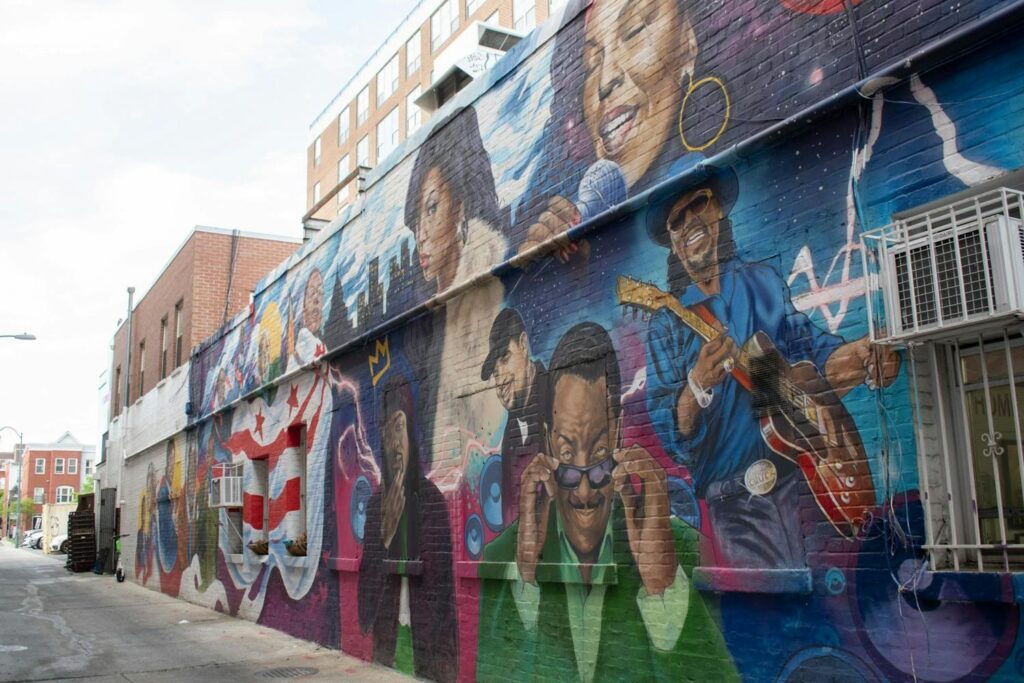
How music defines D.C.’s history of ‘resistance and resilience,’ according to historian Maurice Jackson
James Reese Europe was born in 1880, in Mobile, Alabama. When he was ten, he moved with his family to Southeast D.C., near his father’s post office job. John Philip Sousa, director of the Marine Corps Band, lived just a few doors down. Sousa’s group gave music lessons to Black youth like Europe, who took piano and violin lessons. Europe attended M Street High School, the first public high school for Black students in the country, where he was in the cadet corps. (It was later named Paul Laurence Dunbar High School.) After moving to New York City in 1904, he became the first great Jazz bandleader to have originated in Washington.
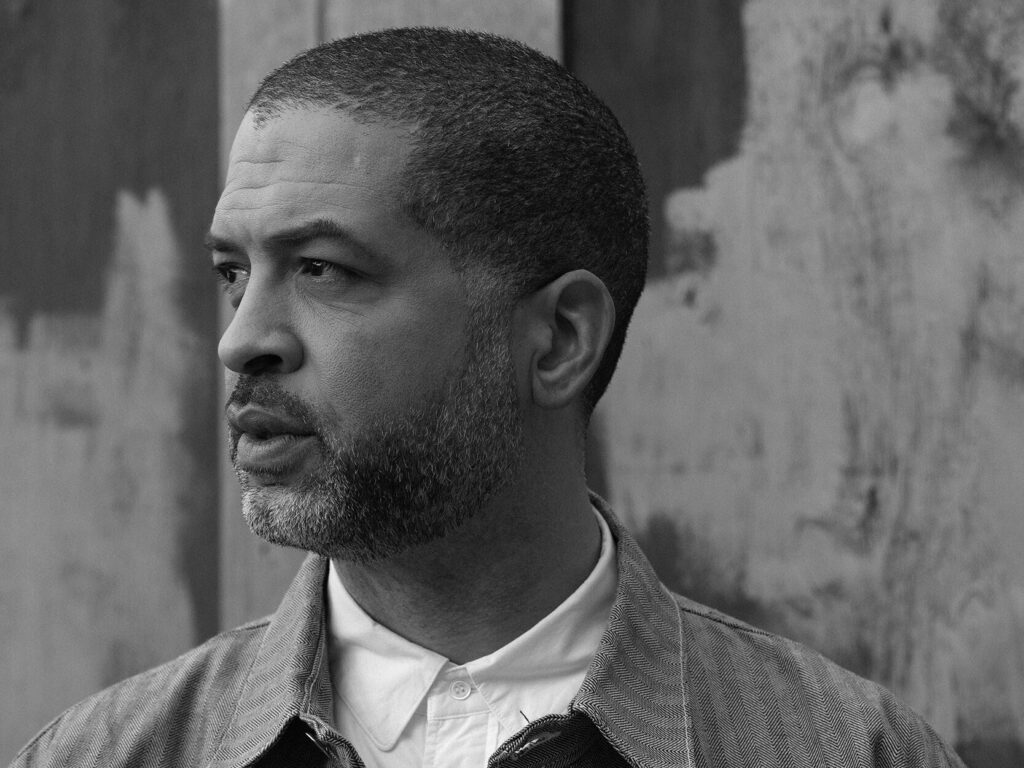
Fight in Hell: How Jason Moran uplifts the legacy of James Reese Europe — and inspires action today
But he joined a mini-movement of Black musicians who, as Langston Hughes wrote, moved to Harlem to escape Washington’s crippling discrimination. In 1910, Europe founded the Clef Club, a musicians’ hangout, labor exchange, fraternity club, concert hall and contracting agency for Black musicians, the first of its kind. Europe formed the Clef Club Symphony Orchestra in 1912. During World War I, he served as an officer in the 369th Infantry Regiment, known as the Harlem Hellfighters, joining the 325,000 other Black and colonial-subject soldiers who fought with the Free French forces, after the U.S. Army refused to muster its own Black battalions for warfare. The French called the regiment the “Enfants Perdus” (lost children). His regimental band became a sensation throughout Europe, and is widely credited with helping to introduce Jazz to the continent.
The 1939 conflict between the world-renowned contralto Marian Anderson and the Daughters of the American Revolution (DAR) is a well-known chapter in American history. When the organization would not allow Anderson to perform at Constitution Hall because of her race, First Lady Eleanor Roosevelt intervened. Finally, the concert was held on the steps of the Lincoln Memorial on Easter Sunday with 75,000 in attendance. Anderson sang “Nobody Knows the Trouble I’ve Seen,” “Ave Maria,” “America the Beautiful” and “Were You There When They Crucified My Lord.” Millions worldwide heard the concert live via NBC Radio broadcast or on recorded newsreels.
Also in 1939, the Baltimore-born Billie Holiday performed “Strange Fruit” at New York’s Café Society. The Baltimore Afro-American later reported, “Miss Holiday recently sang [‘Strange Fruit’] at the Howard Theatre,” and noted “speculation . . . as to whether it actually will incite or condemn mob action.” The following year, Paul Robeson was barred from singing at Constitution Hall and instead performed at the Uline Arena on Third Street NE.
ELLINGTON AND THE ERTEGUNS
Perhaps Washington’s most well-known jazz master is Edward Kennedy “Duke” Ellington, who was born in the nation’s capital in 1899. Initially a visual artist, in 1916, Ellington won an NAACP poster contest and an art scholarship to Pratt Institute. But instead, he pursued a career in music, becoming a sign painter and forming Duke’s Serenaders. Like Cook and Europe, he looked to Harlem. “It was New York that filled our imagination. … Harlem, to our minds … has the world’s most glamorous atmosphere. We had to go there.” And in 1923 he did. Over the next 50 years, Ellington wrote more than 1,500 compositions and made hundreds of appearances in his hometown, always making sure to pay homage to his city and people.
Ahmet and Nesuhi Ertegun, the sons of the Turkish ambassador to the United States, arrived in Washington in 1935. “There was total segregation,” Ahmet wrote of what he found. “Black and white musicians did play together, but it was not easy. It was more possible in New York, particularly Harlem, but in Washington at that time it was virtually impossible.” Ahmet and Nesuhi began hosting Sunday lunches at the embassy with musicians like Ellington, Louis Armstrong, Johnny Hodges, Benny Carter and Lester Young. When a Southern senator who lived nearby complained about Black musicians entering through the front door, his father, the ambassador, responded: “In my home, friends enter by the front door — however, we can arrange for you to enter from the back.”
The brothers decided to hold public jazz concerts for integrated audiences in 1942, helping to break the segregated capital’s color barrier in entertainment spaces. “We had a lot of trouble finding a place in Washington where we could stage this event. The first concert we held was at the Jewish Community Center,” Ahmet wrote. And so a pair of Muslim brothers were promoting Black music at a Jewish Community Center.
Jazz goes to university
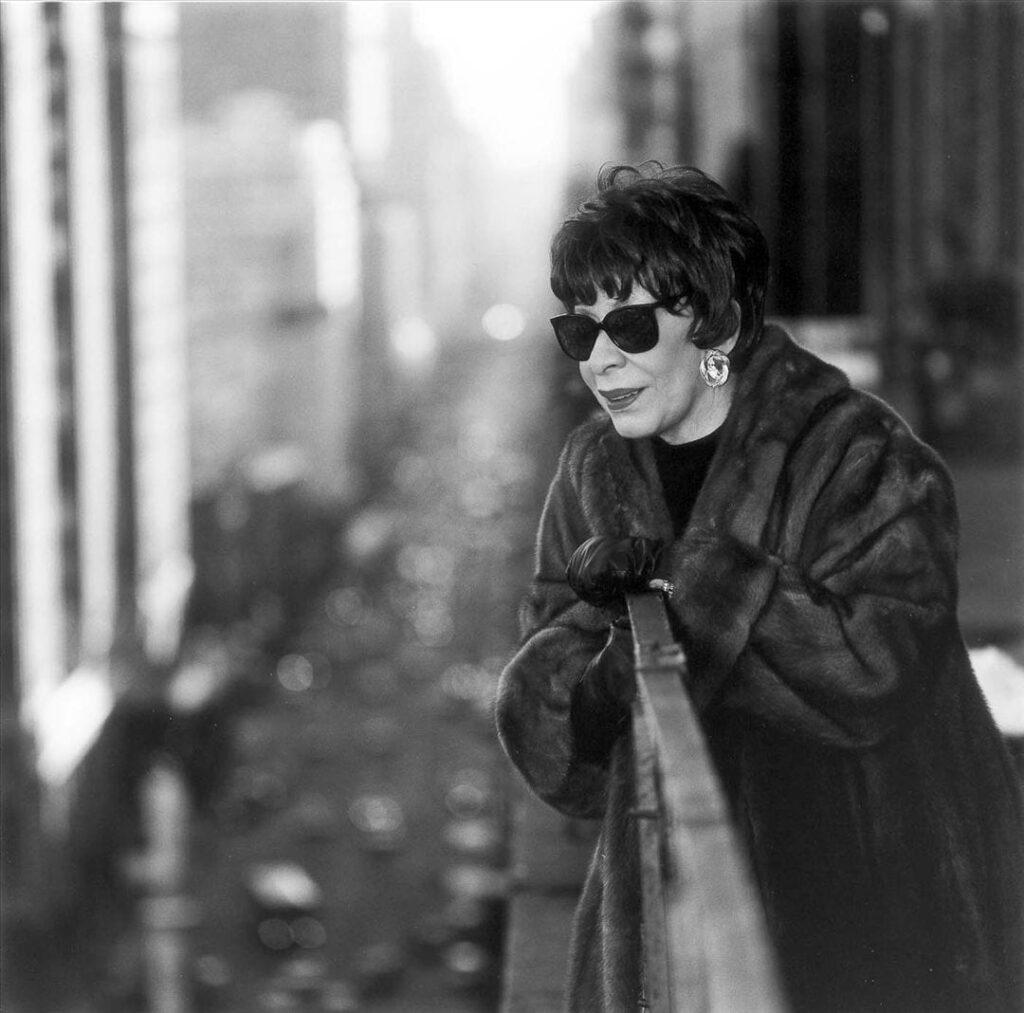
Newly released ‘Live at the 4 Queens’ presents Shirley Horn, D.C. jazz royalty, at the peak of her powers
And Washington was becoming a Jazz town. There soon appeared musicians from around the country, and later locally grown talents like Shirley Horn, June Norton, Buck Hill and John Malachi. Jazz was at first not accepted by Washington’s Black elite or at Howard University. The D.C.-born poet and critic Sterling A. Brown began teaching at Howard in 1929, and would eventually play a major role in bringing jazz to the campus. At the Monterey Jazz festival in 1959, Brown gave a talk, “The Social Background of Jazz,” in which he said that “the closest thing to jazz that ha[d] been played at Howard University … [was] Paul Whiteman’s version of ‘Rhapsody in Blue.’”
But in 1968, Donald Byrd became the founding director of jazz studies at Howard University. He brought a prolific knowledge of music, having played with greats like Thelonious Monk and John Coltrane.He founded and toured with his band, the Blackbyrds, which included Howard students. Fred Irby joined the Howard faculty in 1974, founding the Howard University Jazz Ensemble the next year and eventually taking over the jazz studies directorship from Dr. Arthur Dawkins. At the public Federal City College (later the University of the District of Columbia), Calvin Jones of Cardozo High School joined the faculty in 1976. Jones and Dawkins played together in the Capital Jazz Quintet.
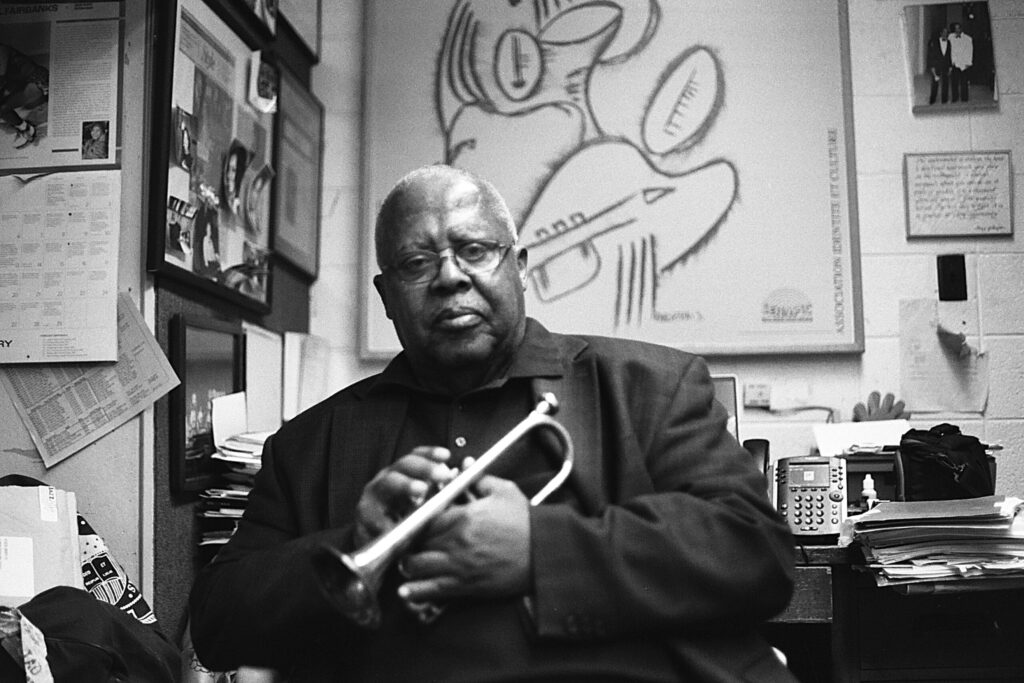
Jones, Irby and Dawkins played in pit orchestras of shows that came to D.C. and were part of the close-knit jazz community in the area, helping to keep the academic jazz programs at these majority-Black institutions united with the jazz scene on the ground in D.C.
Jazz goes to LORTON
In the 1950s, Jazz music also traveled to two other significant spaces owned by the federal government, the Lorton Correctional Complex in Virginia and the Carter Barron Amphitheater in Rock Creek Park.
The Lorton Jazz Festival was conceived by the prison’s Catholic chaplain, Dominican priest Carl Breitfeller. The first annual concert in 1956 featured Sarah Vaughan. Louis Armstrong appeared at the second festival in 1957, the same year he raised his voice in protest on behalf of the Little Rock Nine. At the other end of Washington society stood the Carter Baron Amphitheater. Beginning in the 1950s the Carter Barron held jazz, folk, blues, R&B, classical and other musical performances. At these outdoor concerts, the Black and white elite often took in the music alongside working-class Washingtonians.
In 1965, at the 10th Lorton concert, the crowd of 1,500 inmates witnessed the first time that Frank Sinatra and Ella Fitzgerald ever performed together. In 1968, three months after Dr. Martin Luther King was assassinated, Fitzgerald performed at both the Carter Barron Amphitheatre and at the Lorton Jazz Festival. For a while in 1979 and 1980, the University of the District of Columbia jazz combos played at Lorton as part of the school’s Lorton Prison College Program. By the 1990s, the Carter Barron Amphitheatre was in decline and in 2013, it closed. Lorton was closed in 2001, and has been converted into condos and townhomes.
THE U STREET CORRIDOR
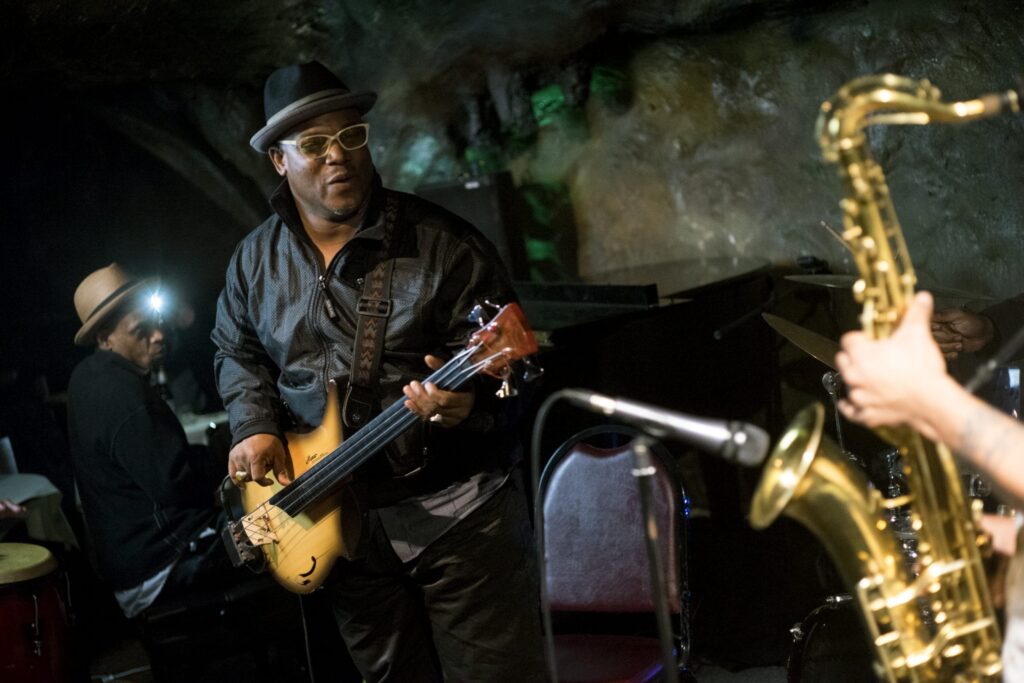
Throughout the mid-20th century, the U Street corridor in Northwest D.C. was packed with jazz clubs and theaters. Pearl Bailey, one of D.C.’s proudest musical expatriates, declared it “Black Broadway,” and the name stuck. After a period of decline in the 1970s and ‘80s, the corridor was host to a resurgence of jazz clubs in the 1990s and 2000s, when no fewer than half a dozen clubs were regularly hosting the music along the strip. But more recently, gentrification has decimated this historic corridor. The legendary Bohemian Caverns club, which had been in operation off and on since the 1920s, was forced to close in 2016.
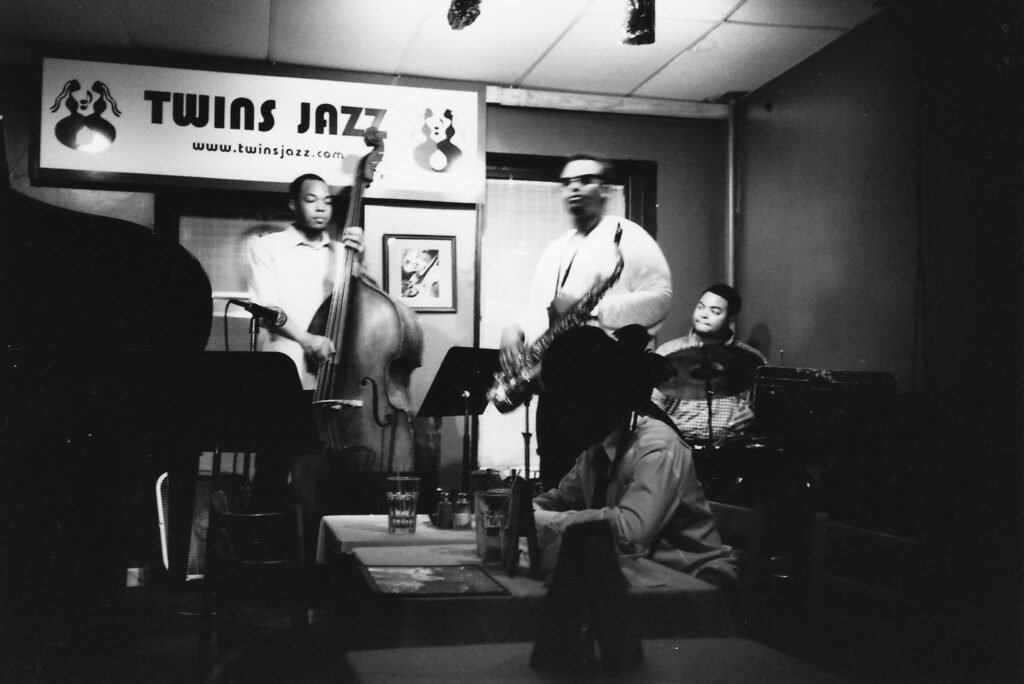
Twins Jazz Club, which opened near the intersection of 15th and U Streets in 2000 and had been listed in DownBeat magazine as one of the 100 best jazz clubs in the world, fell victim to the same forces and closed in 2020. Today, of the historic jazz clubs that once populated D.C., only Blues Alley remains. The year 2025 marks its 60th anniversary.
Washington-born pianist Dr. Billy Taylor, who headed the jazz program at the Kennedy Center prior to Jason Moran, reflected on his city in his song “I Wish That I Knew How It Would Feel to be Free,” in 1963.
The song became a favorite of Dr. King, who “loved jazz,” Taylor recalled. But because he could never remember the song’s title, he always asked the pianist to play “that Baptist-sounding song.”
The lyrics were about freedom, which Jazz in D.C. has always been about.
‘A History of Jazz in D.C.’ was compiled with the support of HumanitiesDC.

Maurice Jackson
Author
Maurice Jackson is a professor of History, Black Studies and Music at Georgetown University. He is the author of Rhythms of Resistance and Resilience: How Black Washingtonians Used Music and Sports in the Fight for Equality (Georgetown University Press, 2025) and Let This Voice Be Heard: Anthony Benezet, Father of Atlantic Abolitionism (University of Pennsylvania Press, 2009), as well as the soon-to-be-published Halfway to Freedom: The Struggles and Strivings of Black Folk in Washington, DC, 1780 to 2020, expected from Duke University Press. A lifelong activist and organizer, Jackson was an elected delegate to the 1982 Washington, D.C. Statehood Constitutional Convention, and in 2009 he was inducted into the Washington, D.C. Hall of Fame. He was selected by the mayor and the D.C. Council to serve as the first chair of the DC Commission on African American Affairs (2013-2016).
Read his curriculum vitae here.