Stephen Arnold makes the music ‘I felt in my heart’
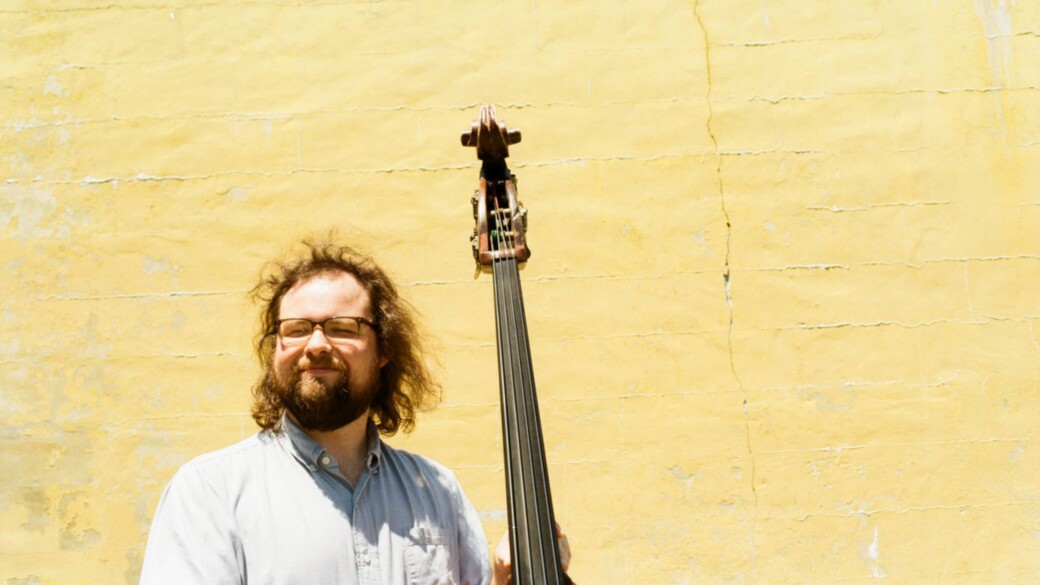
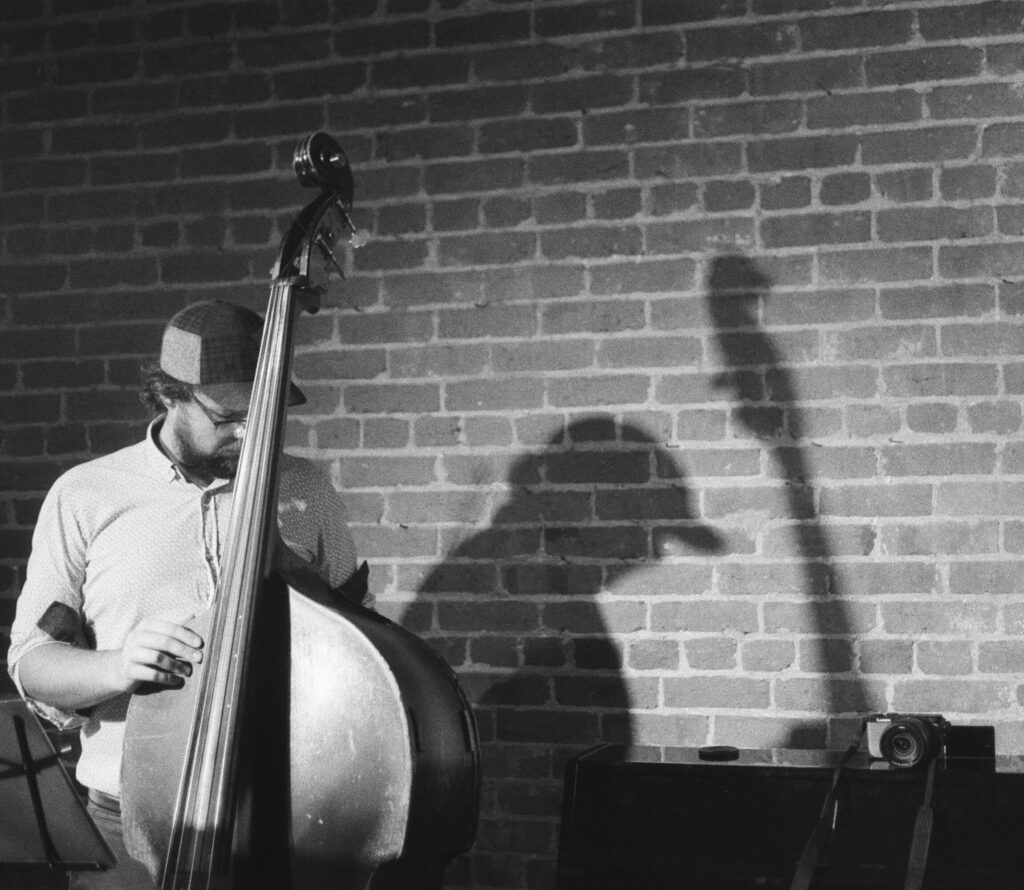
Around D.C., it can feel like Stephen Arnold has played with everybody. The bassist appeared on the scene over a decade ago, after coming to study at the George Washington University, and since then his signature burly tone and sensitive melodic choices have shaped countless ensembles. The Greenfield, Mass. native bore steady witness to the final days of the District’s pre-COVID scene, a constant presence at now-shuttered or relocated U Street, Adams Morgan and Dupont Circle clubs like Twins, Columbia Station, Bin 1301 and Eighteenth Street Lounge.
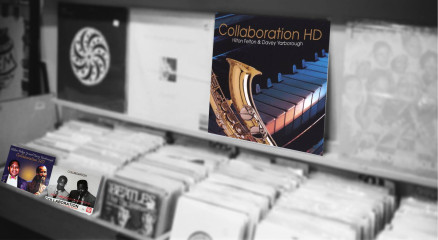
From the streets into the studio, Arnold’s bass work also has provided the foundational sound for boundary-exploring ensembles like The New World and ¡FIASCO!, and has anchored a significant number of D.C. jazz records in the last few years. According to his own discography, Arnold has appeared on close to 50 albums as a leader or sideperson — all since 2019. If your neighborhood record shop has a local music bin, you’re likely to bump into at least one joint with him on it.
Now on faculty at GW’s Corcoran School of the Arts and Design, Arnold has transitioned into a critical mid-career phase, in which his work is imbued with the ideas and approaches he spent the last decade absorbing across D.C.
Arnold has explored the role of bandleader and composer since before the pandemic with his Sea Change ensemble, whose debut was voted one of CapitalBop’s Top 5 albums of 2020. The ensemble’s sound has stretched to new heights with the release this summer of its latest effort, The Hitting Wall, an introspective monument to Arnold’s mentors, his upbringing and his rewarding musical approach.
Around the release of The Hitting Wall, CapitalBop’s Giovanni Russonello and Joshua Myers interviewed Arnold on WPFW’s “Jazz Stories” about how he views the work of bandleading and his view of the D.C. jazz scene circa 2026. Excerpts from that interview are below, edited for length and clarity.
Josh Myers: One of the things that I really love about your music is the place it takes me emotionally. Does it do the same for you? And what is guiding your hand when you write these really beautiful pieces?
Stephen Arnold: As Wayne Shorter said, “play the way you wish the world to be.” I was kind of an “adult beginner” when it came to jazz. I started learning upright bass for real at the George Washington University when I was about 19. At first, I was learning music, learning jazz, “the right way” by trying to get into the emotional language of the people who I was supposed to like and supposed to get into. I tried that for years.
Finally, I tried to let it go, and I was able to access all of this music that I loved when I was growing up — music I was listening to recreationally, not professionally or academically. Meanwhile, I had learned all these skills from playing in D.C. and from my lessons with the great teachers at GW, especially Herman Burney — the maestro who was my bass teacher — as well as Peter Fraize, Alejandro Lucini, Jon Ozment, Thad Wilson, Alison Crockett and John Albertson.
That allowed me to get to something that felt more authentic. I could then accomplish both things: I could improvise and I could play with the musicians who I’d really come to enjoy playing with, and then I could sneak in [the music of my childhood]. For example, on the first record, there’s a lot of Sufjan Stevens.
For me it was about trying to reach that place — but I couldn’t do that while the music felt external. I had to connect it to something that I felt in my heart.
Giovanni Russonello: I love the way that you move from your solo expression on the bass on this album into group expression. The listener gets to hear you very intimately; later, you build big compositions around yourself and this incredible band. How did you bridge between playing in those two distinct musical spaces?
SA: Well, it was really scary. For a long time, I always felt that the weakest thing about my musicianship was my actual bass playing. [This gets to] the reason that it’s called The Hitting Wall. I grew up playing a lot of tennis, and so during COVID, when I was back in Greenfield, Mass. — where I grew up — I would go out [and hit] pretty much every day. My grandma was staying with us, and my brother’s college was locked down. So all of a sudden my parents had a house full of five or six people in it, instead of two, and there was no space.
I’d ride my bike, I’d go over to the hitting wall, and I would just hit ground strokes against the wall for hours, every day. One day, I just started sobbing. It was crazy — to this day, I don’t understand it, but it was a kind of catharsis that I realized I could only get to when I’m really dealing with what I’m working with.
Something that I had begun to feel was that I was putting together these bands of really phenomenal players, but I felt like I’d started to hide behind them. I didn’t really trust myself enough to do what I was asking my bandmates to do.
So I spent a lot of time in the practice room. And then, it’s funny, I weirdly was able to feel more free because of the additional work that I started doing at the end of last year and the beginning of this year, getting into it with the metronome and the bow. I was just trying to find myself within the synecdoche of being an individual in a community. Not just saying, “Oh, I’m in this band,” but, “I’m this individual in this band. Not only do I write the music, but I’m the guy behind the bass chair. So I’m gonna take it, and I’m gonna make a bass player record.”
JM: The band for this iteration of Sea Change is really on fire: Brian Settles on saxophone, Brandon Woody on trumpet, Nelson Dougherty on guitar, Federico Peña on keys, and Keith Butler, Jr. on drums. You were able to create a wonderful interplay between the push and pull of the collective and the individual. How did you get this group together?
And beyond that, the history of the jazz industry often finds individual geniuses — Miles, Trane, Monk and Duke — promoted without acknowledging the collectives behind them. How have you been able to keep both the collectivity and individuality of Sea Change centered here within that wider context?
SA: I’ll say it this way: I had a really poor competitive tennis career. I was playing some tournaments, and I did not like being out there by myself. I don’t know if it was because I didn’t believe in myself or if it just wasn’t how I was taught. I really liked being on a team.
That’s always been the scenario where I’ve felt the most fulfilled by performance, whether it’s music or sports. So part of the privilege of being a bass player is that you get to be on all these different teams all the time as a freelancer.
Keith and I go back the longest. Keith played on my recital at GW. I must have met him at the Capitol Hill Jazz Jam at Mr. Henry’s or the DC Jazz Jam — one of those sessions — and we just started playing, shoot, almost 10 years ago now. I met Nelson [around the same time]. I would always go to see ¡FIASCO!, which was a band Nelson had started with tenor saxophonist Andrew Frankhouse. Tyler Cassidy, another saxophonist and my “big brother” from GW, was in that band, as was Keith. And the original bass player was Kris Monson. I would go see them every chance I got, and eventually, when Kris moved, I took over the bass chair.
Federico I met in a rehearsal with Alison Crockett — one of my teachers at GW — and we went and hung out at the movies after the rehearsal. And I always thought his playing was so great. And Brian I met at JoJo’s. I would play with him and his wife, Jessica. My first time playing at Blues Alley, I was with Brian and Jessica’s band. Brandon was the same thing: We played in a version of Keith’s band Seysew years and years ago, and from there we would meet at some jam sessions. And he started asking me to sub in his group Upendo, which I think is just doing phenomenal things. I really liked his style, and I could tell that there was a lot of music that we both could relate to.
So I think that for me, my connection with the industry is local, and it’s about becoming part of a community with these people who I think are geniuses.
Thinking about promotion in terms of, “How does this look in a small vertical video that’s 30 seconds long?” hinders my work with the music. That’s not what I do. For me, I’ve got to practice, and it’s going to take hours, or as long as it takes. But I think that it creates a really good experience onstage and [in the recording studio].
GR: From your perspective, as an integral part of the city’s music community for over a decade, what would you say is keeping the scene healthy right now? Where do you find yourself playing and hanging these days, and where should people be listening to the music?
SA: That’s a tough question. It’s just a scrappy bunch of us that’s left.
JoJo’s is the last jazz club on U Street, pretty much. Takoma Station, I think, has done a great job picking up some of the slack since Twins left. And I play [often] at Mr. Henry’s. But otherwise, I think that it’s become segregated, in a way, between private [corporate] gigs and and restaurant gigs, and dedicated places that are really showcasing the music.
I think the main thing that we’re doing is just trying to stay alive and keep it together.
What I notice happening is that musicians are kind of turning on each other. There’’s been a lot of people all of a sudden being kind of duplicitous with the business side of things. … And for me, the thing that has been so great about D.C., and the way that I was able to play on all these gigs — it’s not because I was so good, but it was because people thought that maybe I could be good.